
El Sett: an afternoon full of love, loss and longing
On Sunday afternoon, 29 March, the Verre binding film committee screened the three-hour life story of legendary singer Umm Kulthum at Focus Filmtheater. No one was put off by the long runtime of El Sett; screen 2 was packed!
El Sett
El Sett is a 2025 film made by Egyptian filmmaker Marwam Hamed. The story takes viewers on a journey through all aspects of Umm Kulthum’s life. She was born in a small village along the Nile and grew into one of the greatest female icons in the Arab world.
It turns out that a large group of fans from near and far has come to see the film, as becomes clear when the cinema doors open and the audience flows into the foyer, where they can enjoy a special programme celebrating Egyptian culture.
 El Sett
Egyptian bites
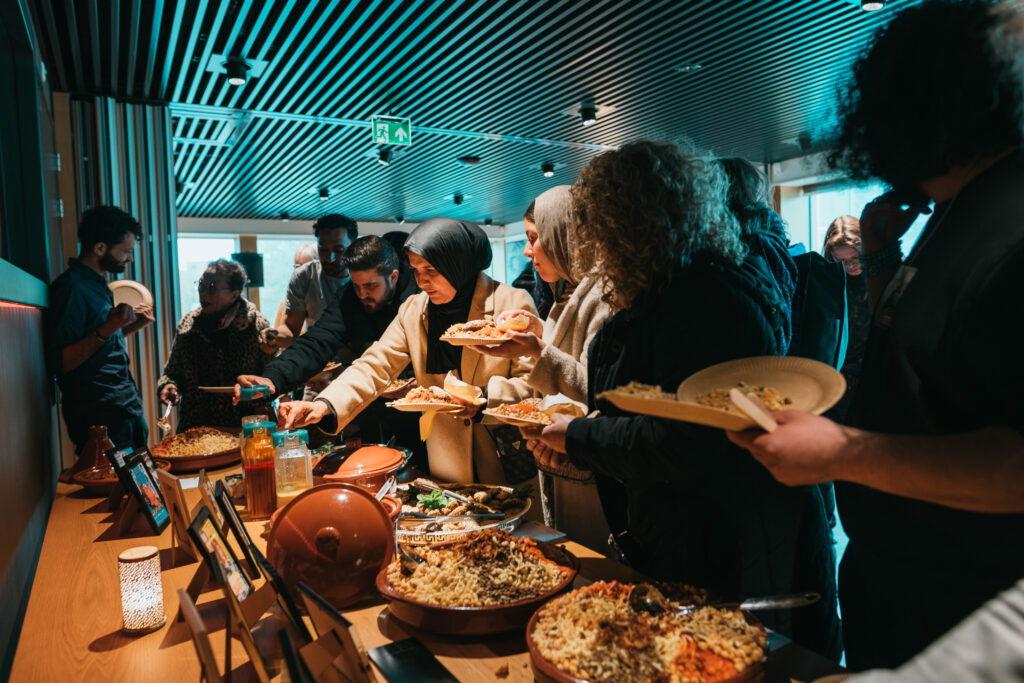
First, of course, there is food! The caterers from ’t Broek Omhoog have prepared such an extensive buffet that everyone can help themselves to a second or even third serving. And that is exactly what happens.
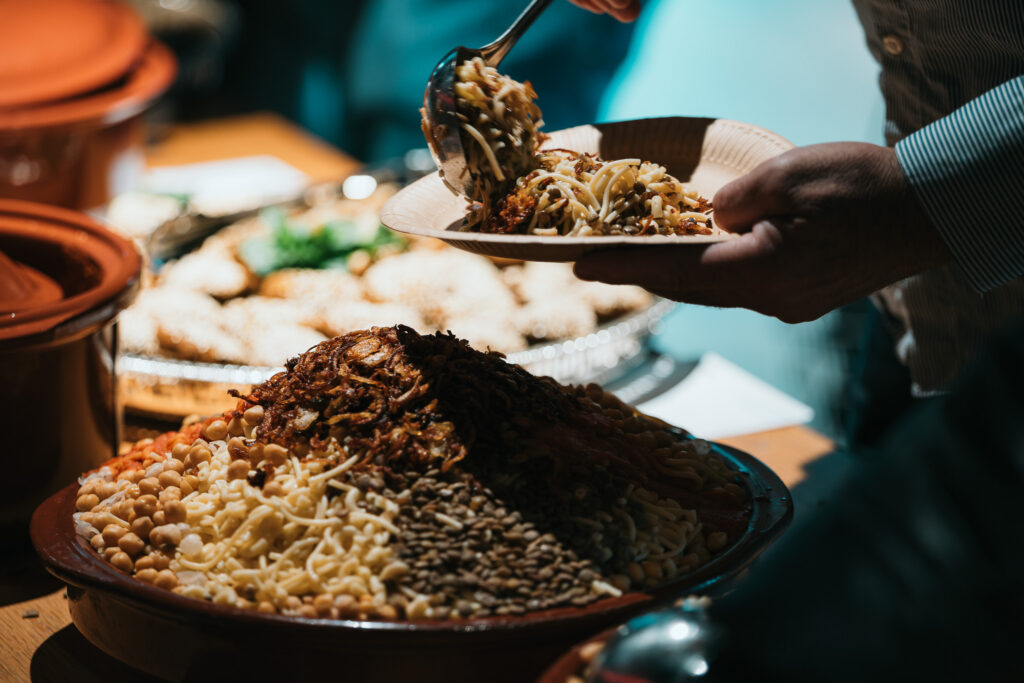
‘Mmm, I love Arab cuisine!’ one of the visitors calls out with a beaming smile above her plate. The film audience eagerly dives into the Egyptian dishes, such as the national dish koshari, which consists of ingredients including pasta, rice, lentils and chickpeas, served in layers and with different sauces. Also on the table are dukkah, a nut and spice blend, and taameya (falafel).
Intimate atmosphere
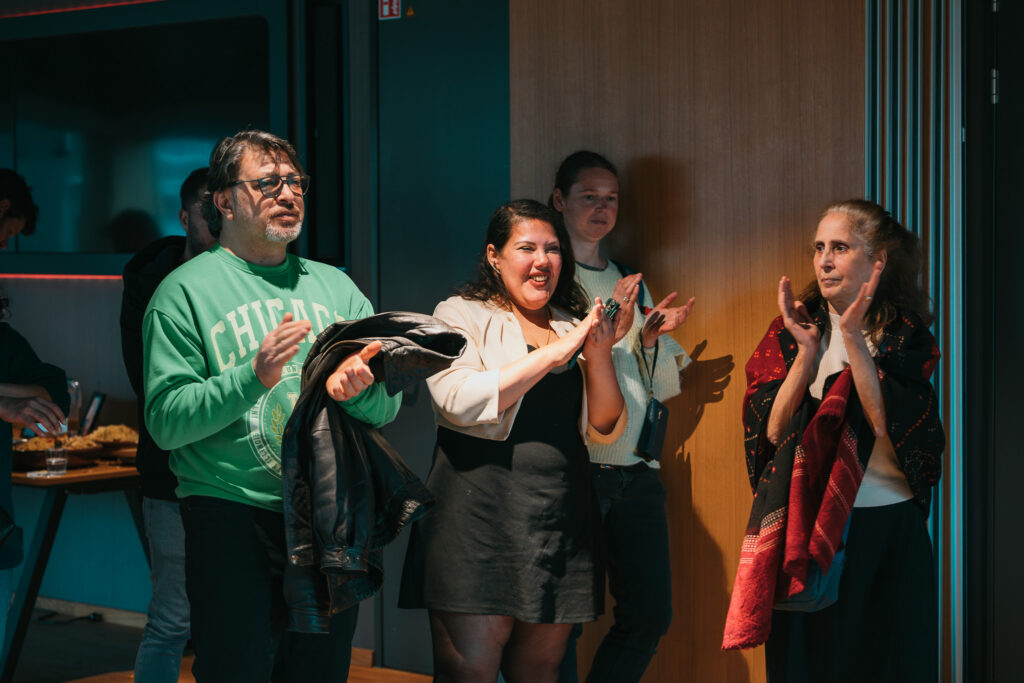
After a delicious meal, Shehade takes the microphone and asks the digesting audience to share their personal experiences with Umm Kulthum. One by one, Yasan, Samira and Walid tell their stories, with Shehade translating them into Dutch.
By then, some of the visitors have already gone home. What remains is a small group enjoying, in an intimate atmosphere, the (shared) memories that Umm Kulthum’s music evokes in them. The result: lots of laughter, recognition and emotion.
Singing and playing
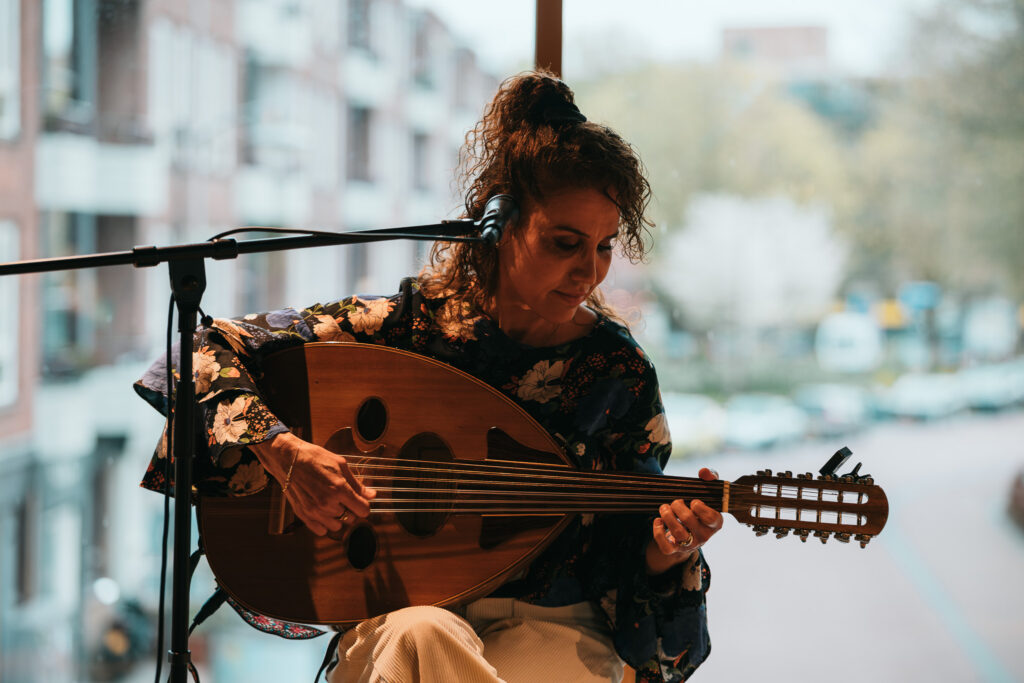
This becomes even stronger when Syrian singer Lamma picks up her ûd (Arabic lute) and plays a few well-known songs by Umm Kulthum. She has a special connection with the singer. As a little girl, she secretly picked up her brother’s ûd. Girls were not really allowed to play instruments, but Lamma felt that this was something meant for her.
Her brother was amazed when he caught her: instead of simply plucking the strings, she immediately played a song. By Umm Kulthum, of course. ‘I know her songs by heart. Her music makes me feel, you know. It speaks of love and pain and waiting.’
This afternoon gives us a chance to show our children some things about Egypt. The food was really good, but the music … if we hear the music it is like we are back in Egypt. I miss every little detail about Egypt.
Sarah & Musap
Magical performance
Lamma’s performance brings tears to people’s eyes. There is applause, singing along and even dancing. ‘Beautiful, beautiful!’ calls out Samira, while someone else in the audience describes it as ‘a magical performance.’
Visitor Marion completely agrees. She came to Focus especially for Umm Kulthum’s music. ‘A friend gave me a CD forty years ago. I listened to it again just yesterday. The filmmaker has really delved deeply into her life, it is beautiful! And then all these extras as well, really lovely!’

Back to Egypt
While belly dancer Patricia brings the evening to a close with a performance, Sarah and Musap explain how important the screening of El Sett is for them and their two young daughters. The Egyptian family lives in the AZC and had not yet seen the film.
‘The movie is trending. Everybody is talking about it, so we are really happy with this opportunity. This afternoon gives us a chance to show our children some things about Egypt. The food was really good, but the music… when we hear the music, it feels like we are back in Egypt.’
Sarah adds: ‘I miss every little detail about Egypt.’
Sometimes life gives you something and takes something away at the same time.
Shehade
The value of sharing memories
As everyone heads home, Shehade says that he thought it was a beautiful afternoon, although he regrets that not everyone stayed for the programme after the film and experienced the value of sharing memories together.
When he thinks of Umm Kulthum, he thinks of his grandmother. She listened to the singer’s deep, warm voice in a refugee camp in the West Bank, where Umm Kulthum could be seen and heard on television and radio every Thursday evening. Shehade himself would sit on the steps outside, listening along.
‘I felt connected. She is so close to my heart. The day I heard that I could stay in Arnhem is the same day my grandmother died. Sometimes life gives you something and takes something away at the same time.’