
Verre binding culture festival: Elderhoeve azc is blossoming!
On 20 June, the doors of azc Elderhoeve were wide open to all Arnhemmers from near and far during the Verre binding Culture Festival, organised by Verre binding, Wintertuin and COA, but above all by the residents themselves! The theme of the day was: the garden of life. It resulted in colourful scenes!
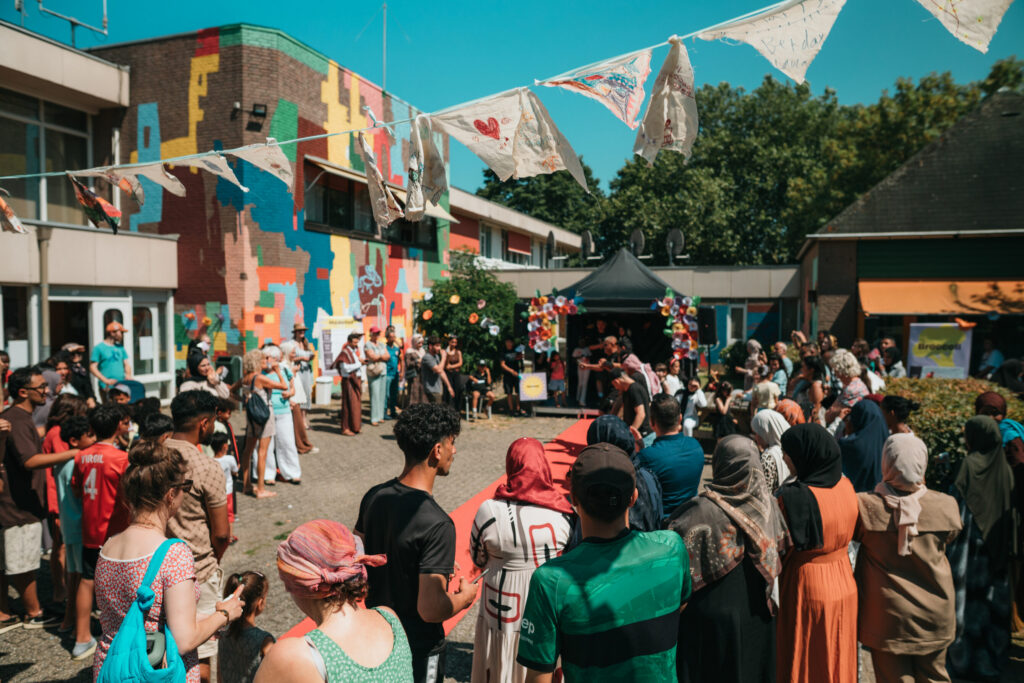
Garden of life
A garden of life cannot exist without flowers. That is why the festival grounds are divided into different sections named after flowers and decorated with handmade paper flowers in all kinds of colours. Right at the entrance, you’ll find the hotspots Lily, Dandelion and Orchid. Outside, there are Jasmine, Daisy, Broccoli, Sunflower and Rose. At all these places, visitors can soak up a wide range of cultural activities.
Anyone who feels like making something themselves can customise clothing, paint henna, or write poetry together at Dandelion. Jasmine is the place to be for children: games, making flags with Changing Stories and (hooray and hurray): circus! Two stages are set up at Sunflower and Rose. This is also where you’ll find the bar and a Wintertuin book stall.
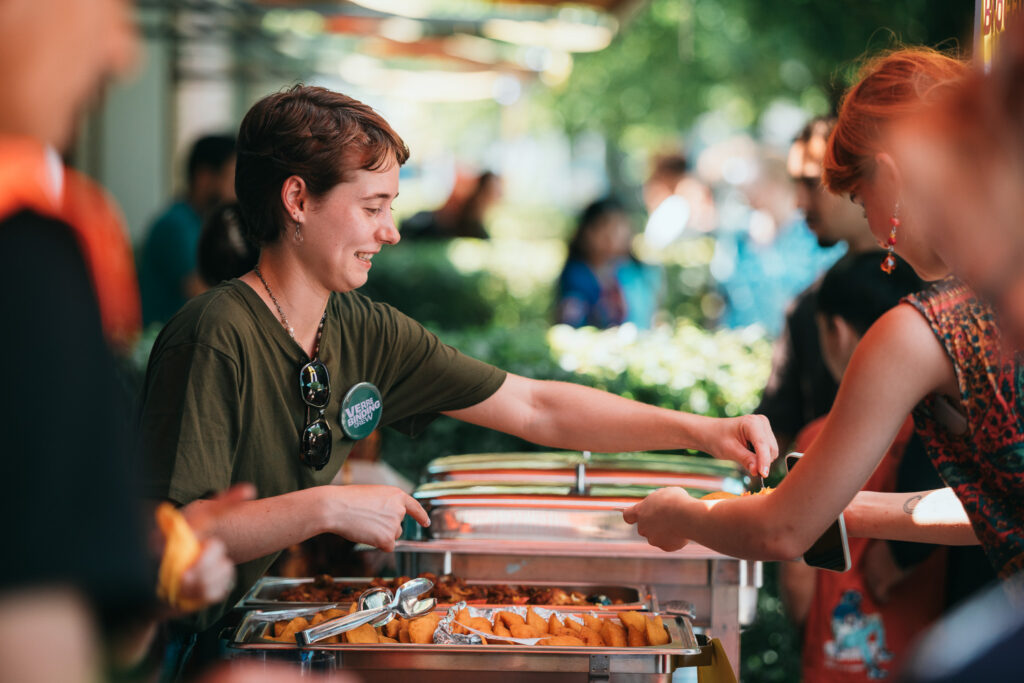
A buffet stretching for metres
And there is food! Where? At Broccoli, of course. A buffet stretching for metres, filled with snacks and dishes from fourteen countries, draws all the festival visitors (and there are so many of them!) to the courtyard of Elderhoeve. Biryani, msakhan, couscous, kibbeh, fattoush—the tables, benches and chairs are all put to good use as people taste the delicious dishes.
The sun is blazing. To cool everyone down, bowls of watermelon slices are carried around among the happy visitors. Too many, as it turns out later, because the watermelons intended for the ‘Watermelon selection crash course’, which starts halfway through the afternoon, are accidentally cut open as well. Luckily, the shop is nearby and the workshop can be saved, because there is a lot of enthusiasm for learning how to tell when a watermelon is ripe.
Music!
More treats can be found under the trees near the Sunflower stage. Two kinds of desserts are served here: sweets, such as delicious basbousa and makrouta, and… music! Monica Coronado kicks things off. Sitting on benches under the parasols on a sprawling grassy field, the audience is not quite ready to dance and sing along yet, but they drift away into dreams carried by the Spanish sounds.
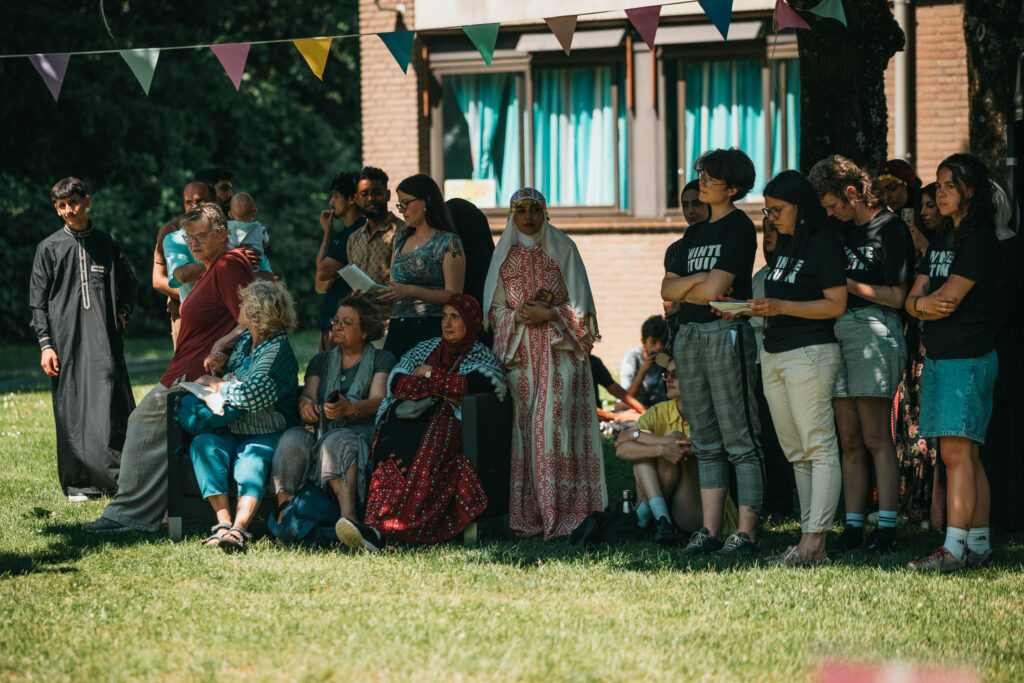
Meanwhile, resident Marjam explains that one of the women running the pastry stall is her mother. ‘Makrouta is a Palestinian delicacy; it means “only one kiss”,’ she giggles. In her traditional Palestinian dress, Marjam is a celebration all by herself. Later, she will tell a story on the Rose stage together with Amal Karam, former city poet of Nijmegen. And afterwards, she will teach the festival visitors how to dance dabke.
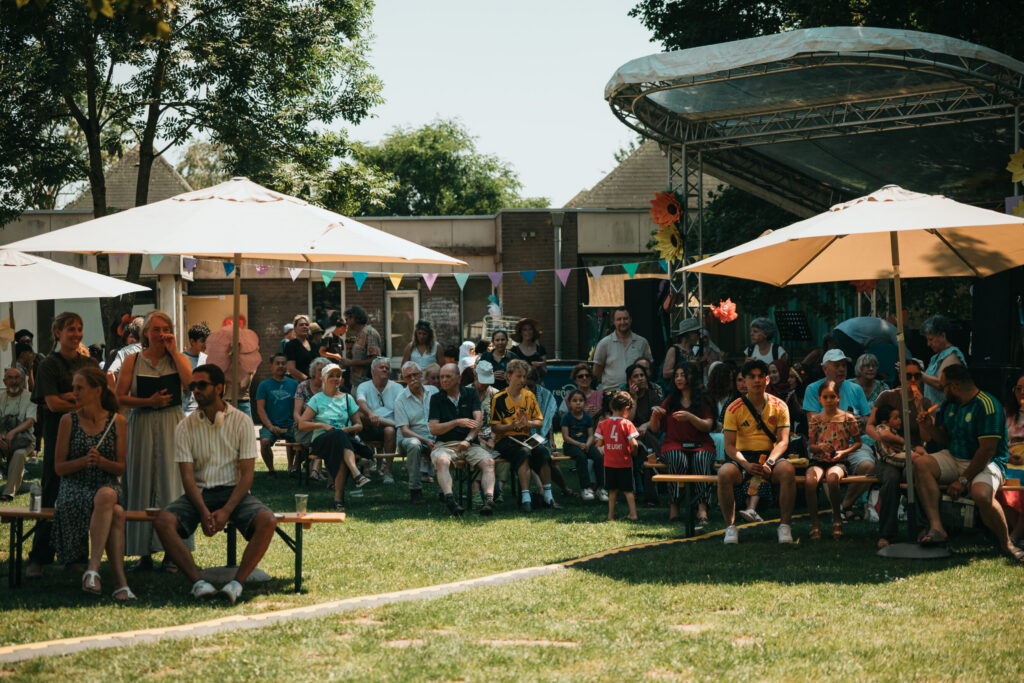
Being together, eating together, music—it is so beautiful to be able to connect people in this way.
Monica Coronado
Being allowed to be here
Monica has finished singing by now and stays around for a while, at least until Babs Gons takes the stage at Rose, she says. ‘Maybe I’ll be here all afternoon. Being together, eating together, music—it is so beautiful to be able to connect people in this way. The fact that the people who live here can forget their worries for one day and feel that they are allowed to be here is incredibly important—especially in these times,’ she says. ‘I’m happy that I get to be part of it.’
Fifteen suitcases
Before the singing and playing father and daughter of Mangel & Loop And The Four Crazy Cats start their next tune, Marjam takes the stage and tells Monica and the rest of the festival audience about her family’s journey as refugees. Fifteen suitcases containing all the memories of the life you know, people who ask you—in a language you do not understand—to hand over your passport: for a moment, everyone can feel how frightening it must be to leave behind everything you love.
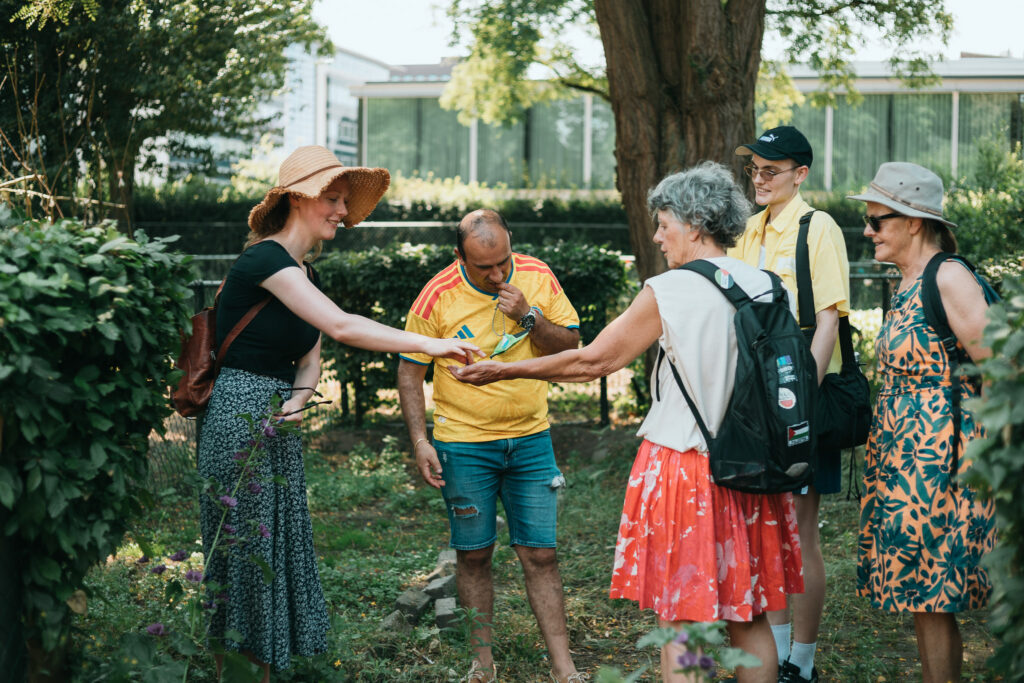
‘I don’t believe in people coming here just to take advantage.’ A little further on, José joins the tour that Felipe is giving in the vegetable garden he has created on one of the azc plots. ‘I volunteer at the bicycle workshop and have been walking around this building for ten years,’ she says. ‘And I know: these people don’t come here for fun.’
While Felipe and the rest of the group exchange recipes and gardening tips, she says: ‘But I think it’s wonderful to see—all these people who are here for the first time today!’
A place like this reminds me of the things that happened there, both good and bad. But this festival is really nice! I love this vibe.
Hassan, visitor
A place full of memories
Today, Elderhoeve is a festive garden where people celebrate that everyone is welcome, but it used to be a care home. One of the festival visitors says that this place holds one of her final memories of her grandmother. That was a long time ago, because in 2015 the building changed its purpose, and since then it has tried to be a home for people who have fled their countries.
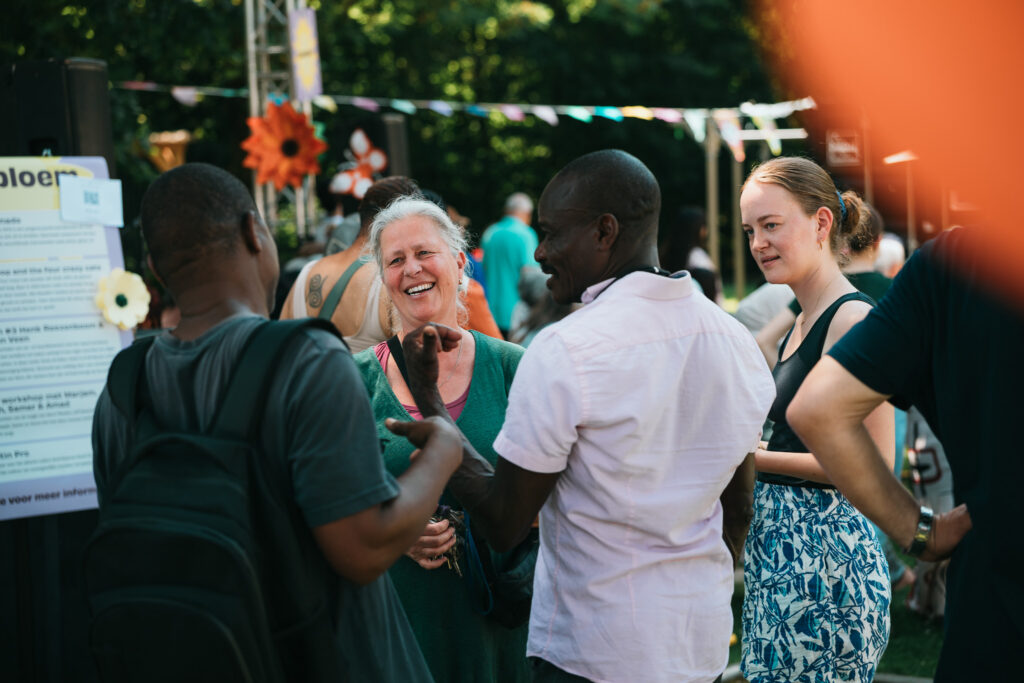
Hasan, who lived at the reception centre on Groningensingel, also finds memories coming back. ‘A place like this reminds me of the things that happened there, both good and bad. But this festival is really nice! I love this vibe.’
For several years now, he has had his own home in Klarendal. He came to the festival together with his neighbours Mark and Ineke. He is happy with them, and the feeling is mutual. Ineke says: ‘Hasan has such beautiful stories to tell!’ But before he can answer, another story begins on stage.
Photography, fashion and theatre
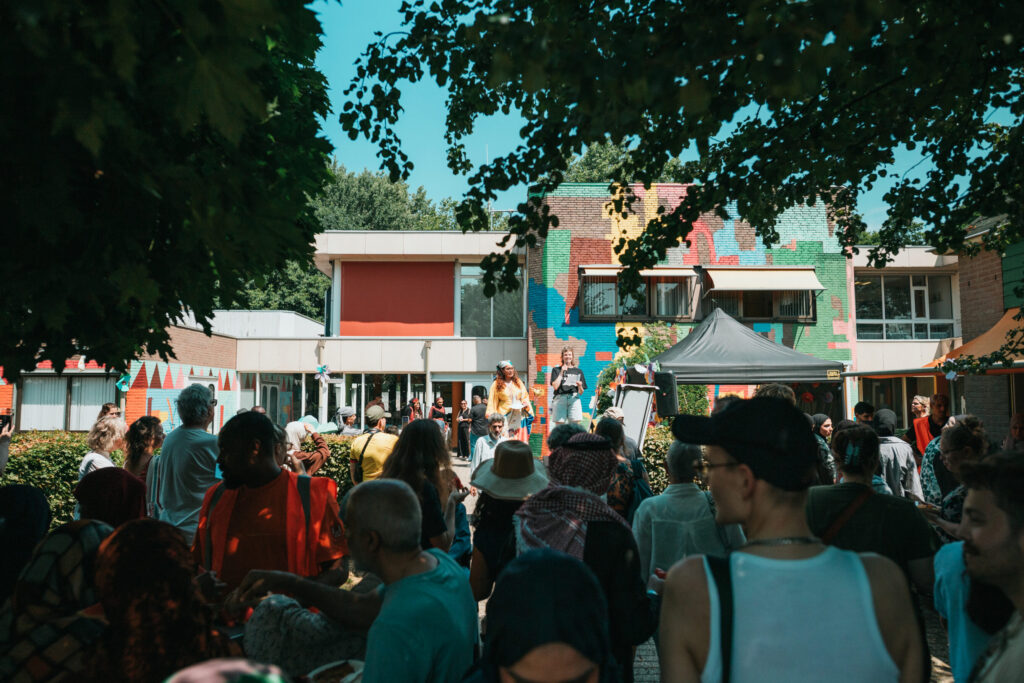
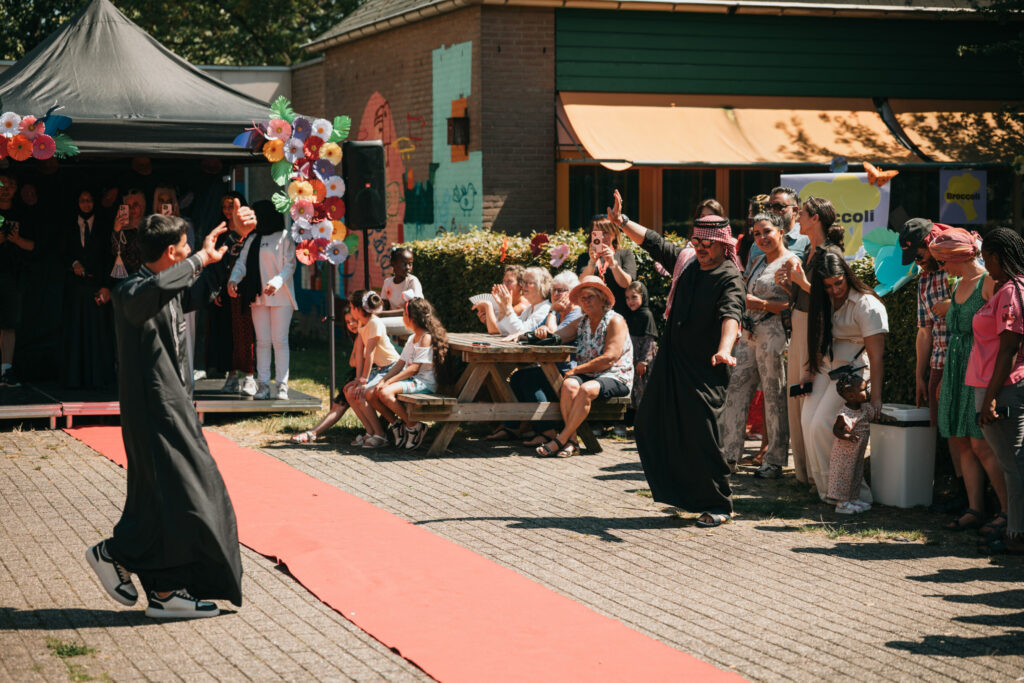
Stories are everywhere this afternoon. At Orchid, where visitors can explore a photo exhibition featuring portraits and stories of residents. Or at Daisy, where residents of Elderhoeve share their stories by putting on a spectacular fashion show on the red carpet in the bright sunshine.
Somalia, Yemen, Colombia, Syria: no one can pass by the joyful and contagious combination of traditional clothing, music and dance without a smile. The audience claps, cheers and sings along, even joining in with a dance.
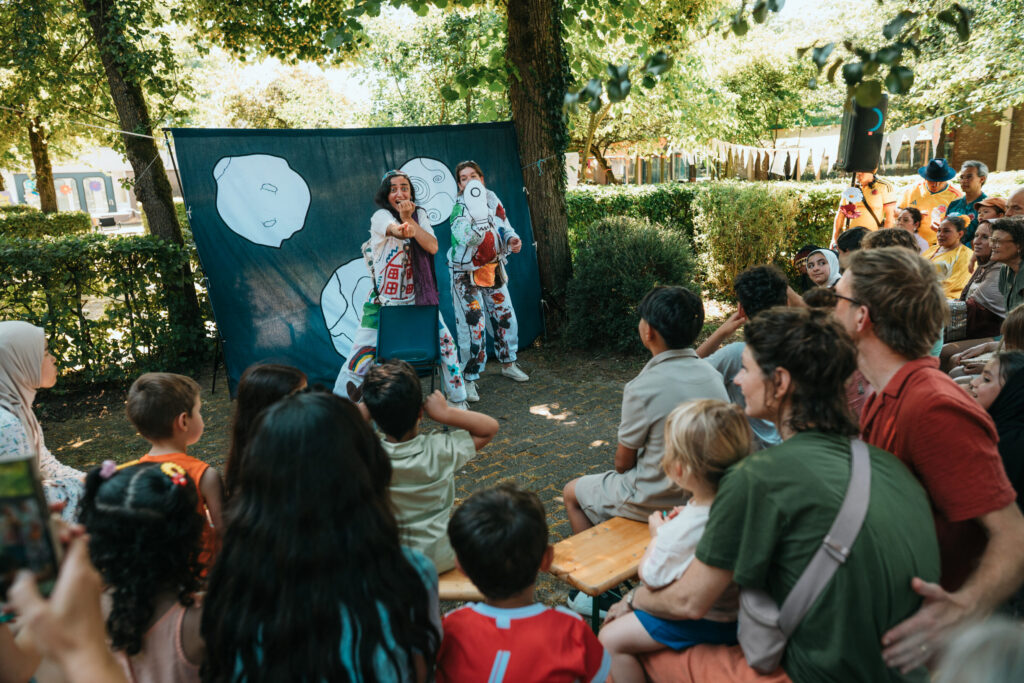
Afterwards, visitors can cool down with Changing Stories. In the shady Jasmine area, the theatre group brings a imaginative story about courage, love and resilience to life.
Never be a stranger
A radiant day comes to a close with poetry and dance. Babs Gons showers the festival visitors with poems:
know your own country
always right behind your eyes
folded just beneath your ribcage
between thumb and index finger
never be a stranger
because all of this is your own country
She then joins Marjam and a whole group of brave festival visitors in dancing the dabke. It doesn’t get much better than this.